

Genicular Artery Embolization (GAE) Treatment for Knee Pain in Wilmington, NC
Knee arthritis pain doesn't always mean you need knee replacement surgery. Genicular artery embolization (GAE) is a minimally invasive, outpatient procedure that calms the inflammation behind knee osteoarthritis pain. It is done through a pinhole-sized access point, with no incisions and no hospital stay.
At Tinsley Surgical, our board-certified vascular specialists use the same catheter-based skills we rely on to treat peripheral artery disease to target the small arteries around the knee. Most patients go home the same day and return to normal activity within days.
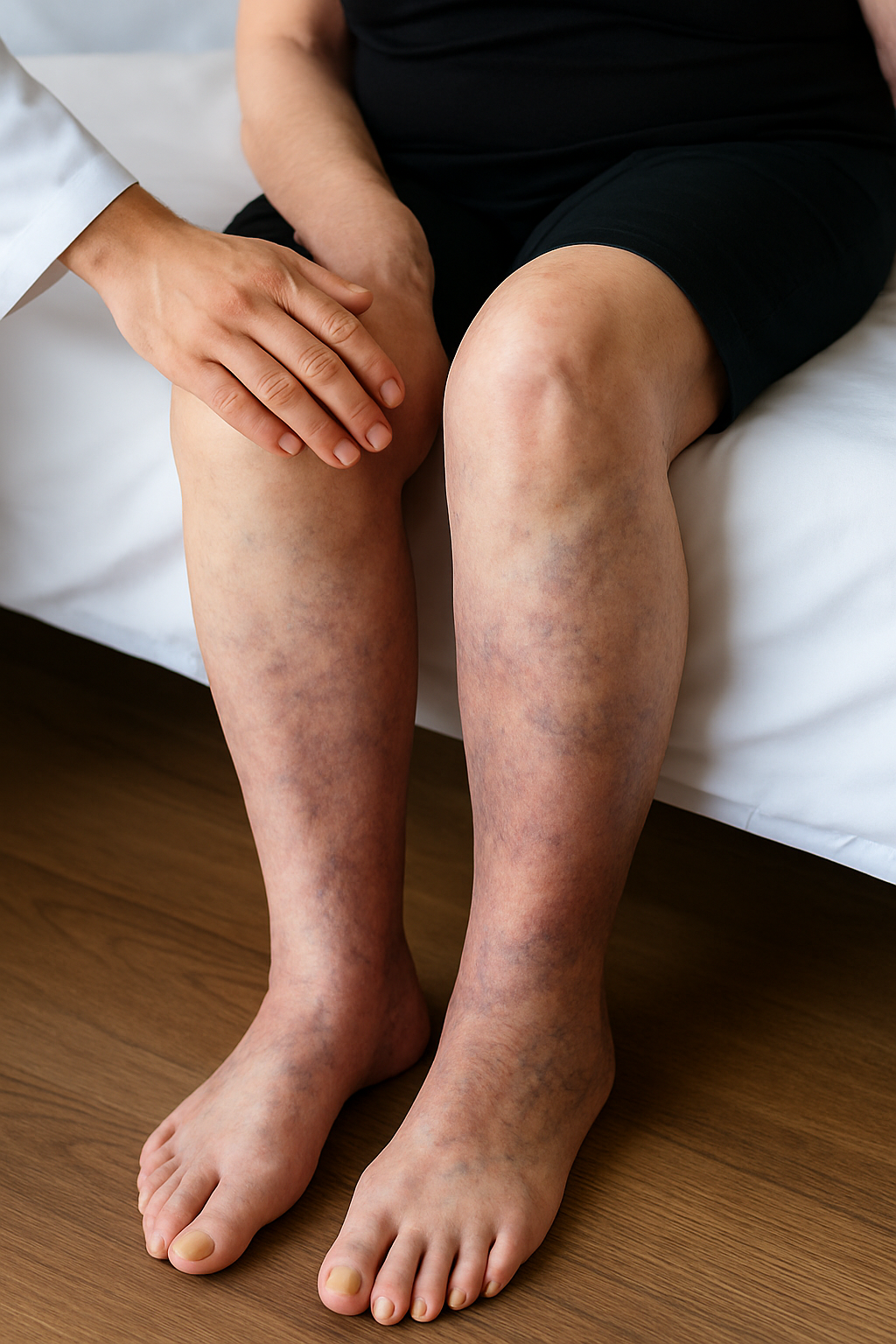
GAE May Be Right for You If You:
Have knee pain from mild to moderate osteoarthritis
Have tried physical therapy, medications, or injections without lasting relief
Aren't ready for knee replacement, or aren't a good candidate for surgery
Want to stay active without daily pain medication
What Is Genicular Artery Embolization?
Genicular artery embolization is a procedure that reduces knee pain by slowing abnormal blood flow to the inflamed lining of the knee joint. "Genicular" refers to the small arteries that surround the knee. "Embolization" means selectively blocking some of their tiny branches.
How GAE relieves knee arthritis pain
Knee osteoarthritis isn't only "wear and tear." As the joint becomes inflamed, the body grows extra, abnormal blood vessels into the knee lining (synovium). Sensory nerve fibers grow alongside them, and this combination is thought to drive much of the pain.
During GAE, a vascular specialist guides a thin catheter through an artery to the knee using live X-ray imaging. Microscopic particles are then delivered into only the abnormal branches. Blood flow to the inflamed tissue drops, inflammation settles, and pain signals decrease. Normal blood supply to the knee, leg, and bone is preserved.
What the research shows
GAE is a newer treatment, but the evidence is growing quickly. A 2026 study in Radiology followed 194 patients for a year after GAE: median pain scores fell from 7 to 3 on a 10-point scale, with no moderate or severe complications reported. In September 2026, the GRAVITY randomized trial became the first to show GAE outperforming standard supportive care for moderate-to-severe knee osteoarthritis.
Results vary from person to person, and GAE does not regrow cartilage or reverse arthritis. Our team will talk honestly with you about what to expect for your knee.
Signs It's Time to Get Your Knee Evaluated
If knee arthritis pain is limiting your day and the usual treatments have stopped working, it's time for an evaluation.
Common symptoms of knee osteoarthritis include:
- Aching pain in the knee that gets worse with walking, stairs, or standing
- Stiffness in the morning or after sitting that eases with movement
- Swelling or tenderness around the joint
- A grinding, clicking, or catching feeling when you bend the knee
- Pain that wakes you at night or makes it hard to get comfortable
Request an evaluation if:
- Knee pain has lasted 3 months or longer
- Physical therapy, medications, or injections no longer give lasting relief
- You're avoiding activities you enjoy because of your knee
- You've been told you'll eventually need a knee replacement but want to explore other options first
Seek urgent care instead if your knee is hot, red, and swollen with a fever, or if you can't bear weight after an injury.
Who Is a Good Candidate for GAE?
The best candidates for genicular artery embolization are adults with ongoing knee osteoarthritis pain who haven't found lasting relief from conservative care. You may be a candidate if you:
- Have knee pain for 3 months or longer, confirmed as osteoarthritis on X-ray or MRI
- Have mild to moderate arthritis, or more advanced arthritis but want to delay or avoid surgery
- Still have pain after physical therapy, anti-inflammatory medications, or steroid or gel injections
- Are not a good candidate for knee replacement because of age, heart or lung conditions, weight, or other health concerns
- Want to stay active, or need a bridge until you're ready for knee replacement
When GAE may not be the right choice
GAE may not be recommended if you have an active knee infection, a recent knee replacement on the same side, severe peripheral artery disease in the leg, or kidney problems that limit the use of X-ray contrast dye. Knee pain from a torn ligament or injury, rather than arthritis, is also usually better treated another way.
At your consultation, we review your imaging, examine your knee, and check the circulation in your legs. Because Tinsley Surgical is a vascular practice, we can evaluate your arteries with an in-office vascular ultrasound when needed. If GAE isn't the right fit, we'll tell you and help you find the treatment that is.
Benefits of GAE Compared With Other Knee Pain Treatments
GAE fills the gap between injections that wear off and a major joint replacement surgery. Key benefits include:
No incisions or general anesthesia.
The procedure uses a small needle access point and light sedation.
Outpatient care.
Most patients go home the same day.
Fast recovery.
Many people return to normal daily activities within a few days, compared with weeks to months after knee replacement.
Keeps future options open.
GAE does not rule out physical therapy, injections, or knee replacement later.
Less reliance on pain medication.
Lower pain can mean fewer daily NSAIDs or opioids.
Find out if GAE is right for your knee.
Request a Consultation| Steroid injections | Genicular artery embolization | Total knee replacement | |
|---|---|---|---|
| Type | Office injection | Minimally invasive, catheter-based | Open surgery |
| Anesthesia | Local | Local with light sedation | General or spinal |
| Hospital stay | None | None (same day) | Typically 0–2 nights |
| Typical recovery | Same day | A few days | 6 weeks to several months |
| How long relief lasts | Often weeks to a few months | Studies report relief at 1 year and beyond for many patients | Many years |
What to Expect During and After GAE
GAE is performed at our Wilmington office location by Dr. Tinsley & Dr. Groot. The procedure itself usually takes about 1 to 2 hours, and your total visit is about 3–4 hours, including preparation and recovery. You go home the same day.
Before your procedure
We'll review your knee imaging and medical history, and may order lab work to check kidney function. You'll receive specific pre-op instructions, including when to stop eating and which medications to pause. Plan for someone to drive you home.
During the procedure
- You'll receive either moderate "twilight" sedation through an IV or local anesthetic (depending on needs of the patient) to stay relaxed and comfortable.
- The skin over an artery in the upper thigh or groin is numbed, and a tiny access point is made with a needle.
- Using live X-ray guidance, your physician guides a thin catheter to the arteries around your knee.
- Contrast dye maps the blood flow and highlights the abnormal, inflamed branches.
- Microscopic particles are delivered into those branches to reduce blood flow to the inflamed lining.
- The catheter is removed and a small bandage is placed. No stitches are needed.
Recovery and results
You'll rest for a few hours before going home. Most patients walk the same day and return to light activity within 1 to 3 days. Your care team will give you post-op instructions for caring for the access site.
Some people notice relief within the first week or two. For others, pain improves gradually over 1 to 3 months as the inflammation settles. We'll schedule follow-up visits to track your progress.
Follow-up care
You'll have a follow-up visit 7–10 days after the procedure, then another one about a month after that (depending on patient needs). At each visit, we track your pain and function so we can see how well GAE is working and adjust your care plan if needed.
Realistic results
GAE helps many people, but not everyone. In a 2026 study of 194 patients, 55% to 80% saw meaningful improvement in pain and function at one year, depending on the measure used. Some patients get partial relief, and a small number notice little change.
GAE treats pain from inflammation. It does not rebuild cartilage, straighten a deformed joint, or stop arthritis from progressing. Pairing GAE with physical therapy and staying active often gives the best long-term result.
Is GAE Safe? Risks and Side Effects
GAE has a strong safety record in published studies, and serious complications are uncommon. As with any procedure, there are some risks, which your physician will review with you.
As vascular specialists, our physicians work inside arteries every day. That experience with catheters, imaging, and arterial access helps keep these procedures precise and safe.
Possible side effects include:
- Temporary skin discoloration over the knee, which usually fades on its own
- Mild knee soreness or a short-term increase in pain for a few days
- Bruising or a small collection of blood (hematoma) at the access site
- Reaction to the contrast dye, or strain on the kidneys in people with kidney disease
- Rarely, damage to the artery at the access site or unintended blockage of a nearby vessel
Other Knee Arthritis Treatments We'll Discuss
GAE is one option among several, and the right choice depends on your knee, your health, and your goals. At your consultation, we'll talk through every reasonable path, including:
- Physical therapy and exercise to strengthen the muscles that support the knee
- Weight management, since every pound lost takes several pounds of pressure off the knee joint
- Medications such as anti-inflammatory pills or topical gels
- Injections such as corticosteroids or hyaluronic acid (gel) injections
- Bracing or assistive devices to unload the painful side of the knee
- Genicular nerve ablation, which uses heat or chemicals to quiet the nerves that carry knee pain
- Partial or total knee replacement for advanced arthritis, through an orthopedic surgeon
If another treatment is a better fit for you, we'll tell you and help coordinate a referral.
Insurance, Prior Authorization, and Self-Pay
Insurance coverage for genicular artery embolization is still evolving, and it varies from plan to plan. Our team will help you understand your coverage before you schedule treatment.
Insurance
Tinsley Surgical participates with all insurance plans. Participation does not guarantee that a specific plan covers GAE.
Prior authorization
For plans that consider GAE, we'll submit a prior authorization request with your records, and we'll update you on the decision.
Self-pay option
If your plan doesn't cover GAE, a transparent self-pay package is available. Ask our staff for details.
Your consultation
Consultation visits are billed to insurance like any specialist visit.
Why Choose Tinsley Surgical for GAE in Wilmington?
GAE is an artery-based procedure, and arteries are what our team knows best. Tinsley Surgical is a respected vein, vascular, and general surgery practice serving Wilmington and southeastern North Carolina.
Your GAE Physician Team
Experienced vascular leadership
The practice is led by Ellis A. Tinsley, Jr., MD, FACS, FSVS, and joined by Samuel J. Groot, MD, RPVI, and David H. Deaton, MD, FSVS. Meet the rest of our team here.
Whole-leg vascular expertise
We also treat peripheral artery disease, poor circulation, and leg swelling, so we look at the full picture of your leg health.
In-office diagnostics
Our vascular ultrasound lab lets us check circulation without sending you elsewhere.
Patient-first care
Patients consistently describe our staff as kind, attentive, and unhurried. We take time to answer every question.
Physician referrals welcome
Orthopedists and primary care providers can refer patients through our physician referral page.
Ready to talk about your knee pain?
Call (910) 769-2583Genicular Artery Embolization FAQs
Is genicular artery embolization painful?
Most patients feel little discomfort. The access site is numbed and you receive light sedation. Some people have mild knee soreness for a few days afterward.
How long does GAE pain relief last?
Studies show many patients still have meaningful pain relief one year or more after GAE. Results vary, and some people may benefit from a repeat procedure in the future.
How soon will I feel better after GAE?
Some patients notice less pain within a week or two. For others, improvement builds gradually over 1 to 3 months.
Where is GAE performed?
GAE is performed on location at our Wilmington Office by our team of experienced doctors. It's an outpatient procedure, so you go home the same day.
How long is the appointment?
Plan on about 3-4 hours in total, including check-in, the 1–2 hour procedure, and a short recovery period before you go home.
Is GAE covered by insurance?
Coverage for GAE varies by plan, and some insurers still consider it a newer procedure. When your plan allows it, we'll request prior authorization for you. If GAE isn't covered, a self-pay option is available. See the insurance section above for details.
Can I still have knee replacement after GAE?
Yes. GAE does not remove any part of the knee or affect the joint itself, so knee replacement remains an option later if you need it.
Can both knees be treated?
Yes. If both knees are painful, they are usually treated in separate sessions a few weeks apart.
Do I need a referral for GAE?
No referral is needed to request a consultation, though some insurance plans require one. Bring any recent knee X-rays or MRI results to your visit.
Find Out if GAE Can Ease Your Knee Pain
You don't have to choose between living with knee pain and major surgery. Schedule a consultation with Tinsley Surgical to learn whether genicular artery embolization is right for you.
Submit the form below or call us directly. A member of our team will contact you to answer your questions, review your insurance, and set up your visit.
Tinsley Surgical
1717 Shipyard Boulevard, Suite 200, Wilmington, NC 28403
Phone: (910) 769-2583 · Fax: (910) 769-3531
Monday–Friday, 8 AM–5 PM
This page is for general education and is not medical advice. Individual results vary. Talk with your physician about the risks and benefits of any procedure.

Fill Out This Form To Get the Care You Need:
OFFICE INFO:
ADDRESS
PHONE

© Copyright 2026, The Customer Factory. All Rights Reserved. Privacy Policy